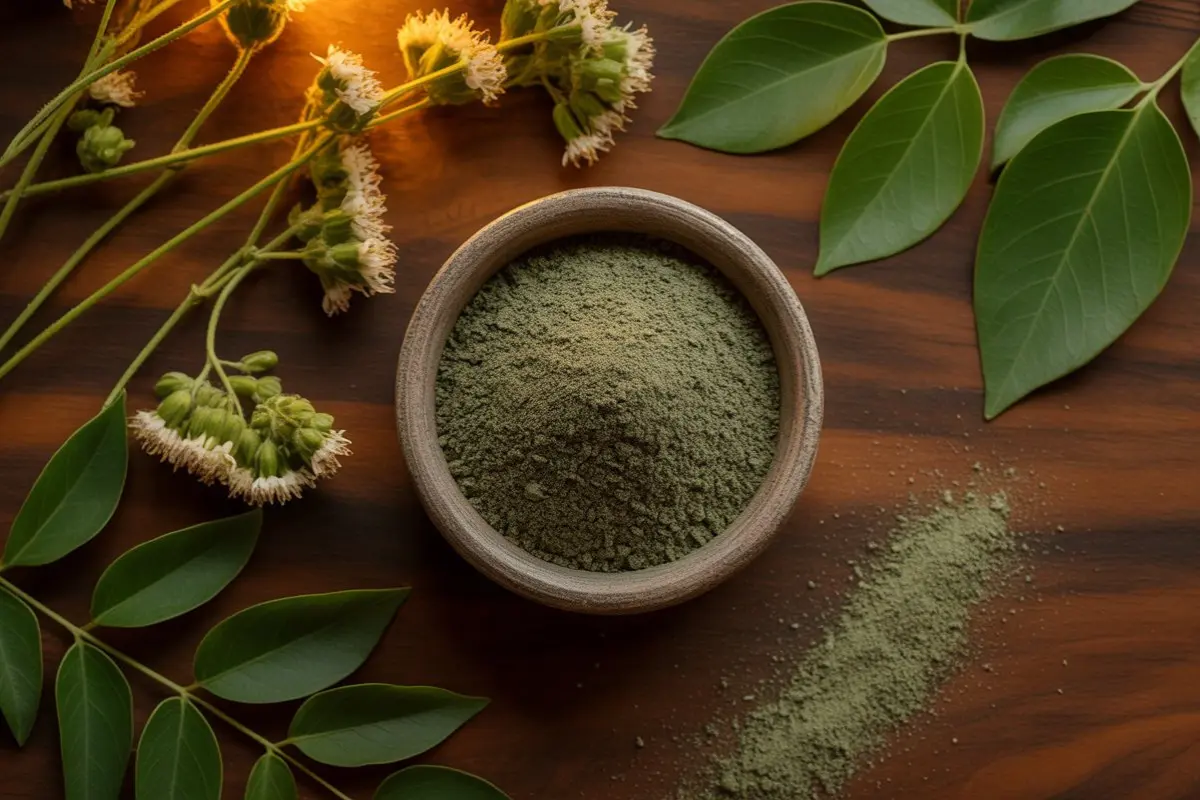
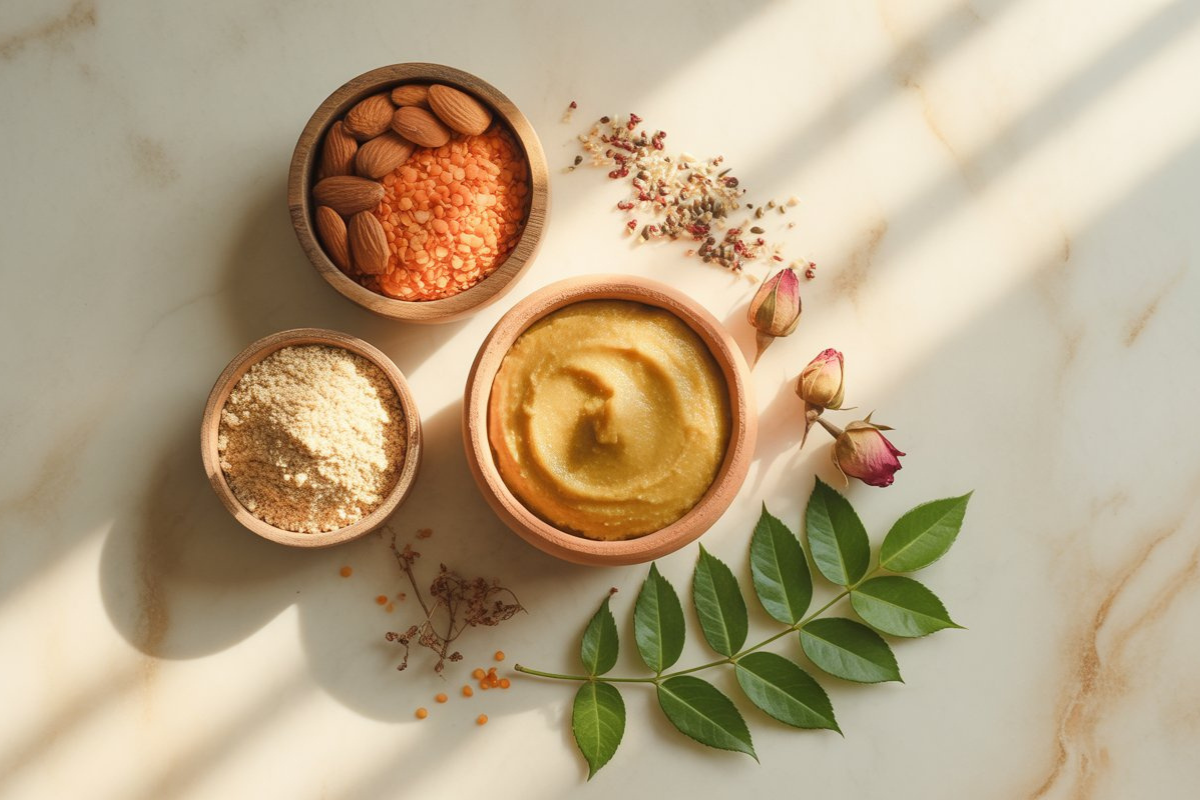
The debate between natural ubtan powder and chemical face packs is one that every Indian with a skincare concern faces eventually. Instagram recommends the latest chemical exfoliant. Your mother swears by the haldi-besan routine she has followed for years. Your dermatologist suggests a prescribed brightening pack. The problem is that most recommendations lack an objective side-by-side comparison — and without that comparison, you end up spending money on both, achieving mediocre results with neither, and experiencing the occasional skin reaction that sets everything back by two weeks.
This guide takes a different approach. Rather than declaring one universally superior, it compares natural ubtan powder versus chemical face packs honestly across the dimensions that actually matter for Indian skin: ingredient mechanisms, short-term vs long-term results, safety profiles, suitability for our specific skin concerns (tan, hyperpigmentation, oiliness, humidity-related breakouts), and cost-effectiveness over 6 months of consistent use.
In this guide, you will discover exactly how each type works, where each excels, where each fails, the specific situations where one is clearly better than the other, and a hybrid approach that uses each type strategically for maximum results — without the confusion, wasted money, or skin reactions that random switching causes.
Natural skincare traditions in India have long included practices inspired by traditional Ayurvedic skincare practices.
As a skincare consultant who has worked with both Ayurvedic and cosmeceutical formulations for over a decade, my perspective is based on documented client outcomes rather than ideological preference for either approach.
How Natural Ubtan Powder Works: The Mechanism Explained
Natural ubtan powder works through multiple simultaneous mechanisms, none of which are particularly aggressive in isolation. This is both its greatest strength and its primary limitation — it is comprehensive but gentle, producing steady improvement rather than dramatic overnight change. Understanding the mechanism prevents the mistake of expecting chemical-speed results from Ayurvedic gradual action.
Natural ubtan powder works through four simultaneous mechanisms: (1) Physical micro-exfoliation via gram flour (besan) and rice flour particles removes dead skin cells and reveals brighter underlying cells; (2) Chemical exfoliation via lactic acid in yogurt or milk gently loosens cell bonds; (3) Melanin inhibition via turmeric's curcumin reduces tyrosinase activity and new pigment formation; (4) Circulation stimulation via saffron or turmeric compounds improves surface blood flow for natural glow. These work in parallel rather than sequence.
The key advantage of this multi-mechanism approach is that it addresses the complete skin concern rather than a single aspect. A brightening chemical face pack that contains only a tyrosinase inhibitor reduces new pigment formation but does nothing to remove existing dead, pigmented cells — the exfoliation mechanism that ubtan simultaneously provides. This is why Ayurvedic formulations often produce more complete results than targeted chemical treatments for Indian skin concerns.
The Gradual Action Philosophy
Ubtan's gentleness is not a weakness — it is a design feature. Indian skin, particularly the dominant Fitzpatrick Type III-V skin common in India, is highly prone to post-inflammatory hyperpigmentation (PIH) — darkening in response to irritation or injury. Aggressive exfoliation or strong chemical peels that cause micro-inflammation frequently trigger PIH in Indian skin, creating the paradox of brightening treatments that cause darkening. Ubtan's gentle mechanisms avoid this risk entirely.
How Chemical Face Packs Work: The Mechanism Explained
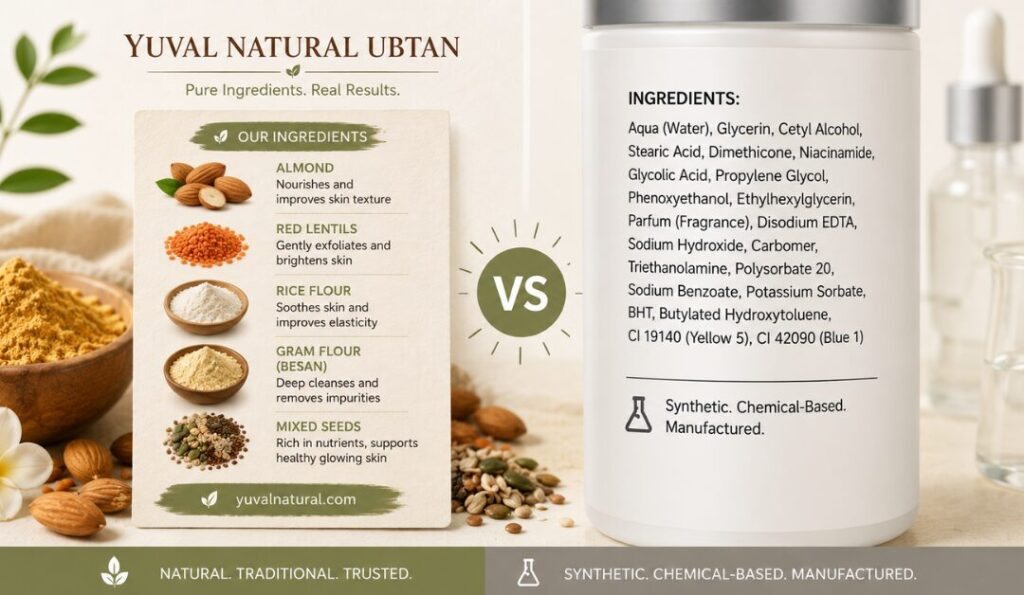
Commercial chemical face packs typically target one to two specific mechanisms with higher potency than natural ingredients can achieve. Their advantage is precision and speed — if your concern is specifically glycolic acid exfoliation or niacinamide brightening, a well-formulated chemical product will deliver those specific effects faster than any natural alternative. Their disadvantage is that this precision comes with specificity — they rarely address your concern from multiple angles simultaneously.
According to a comparative review published in the Indian Journal of Dermatology (2021), AHA concentrations above 5% produce measurably faster surface exfoliation results than any physical exfoliant method, including ubtan. However, the same review noted that Indian skin's higher PIH risk necessitates lower concentrations (5 to 8%) and more cautious application than the Western skin studies that establish these concentrations typically involved.
Short-Term Results: Where Each Excels
Immediate or rapid results are chemical face packs' strongest claim against ubtan. In specific short-term scenarios, chemical formulations deliver faster visible change. Understanding where this advantage is real — and where it is overstated — helps you deploy each type correctly.
The Special Events Consideration
For one-time use before a special event, a well-formulated chemical brightening mask may produce more dramatically visible results in a single application. However, the risk of reaction on unfamiliar skin or in someone with reactive Indian skin makes this a gamble. Ubtan's predictability and safety profile make it the more reliable choice for guaranteed pre-event results without reaction risk.
Long-Term Results: The Honest Comparison
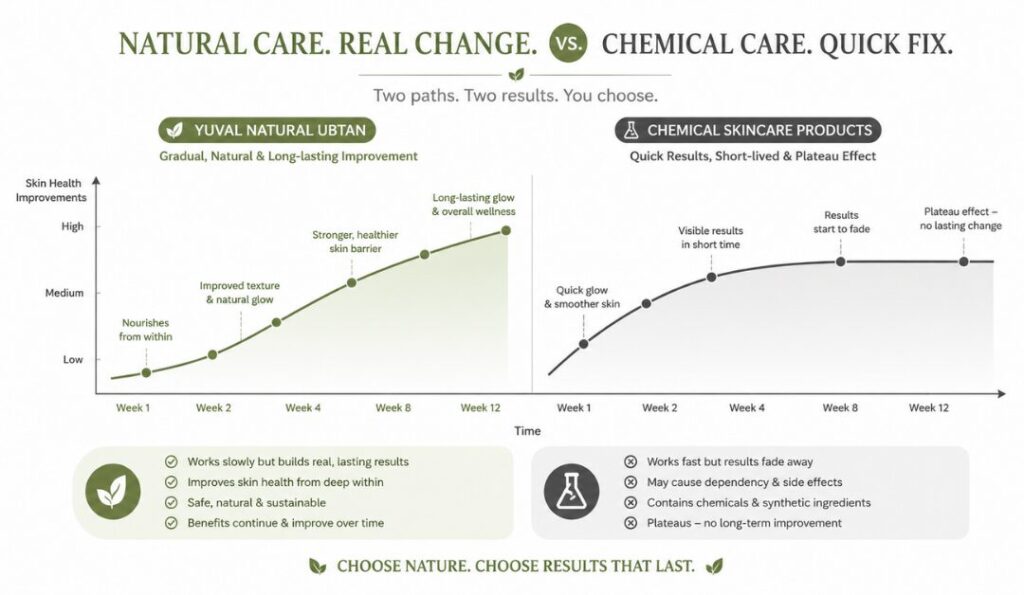
This is where the comparison becomes more nuanced. Long-term (3 to 6 months of consistent use) skin improvement is where natural ubtan often outperforms chemical packs for Indian skin — not because of greater potency, but because of sustainability and the absence of side effects that require treatment breaks.
My clinical observation: clients who use chemical brightening face packs 3 times weekly consistently hit a plateau after 8 to 10 weeks — their skin adapts to the exfoliation and pigment suppression, and results stagnate. Clients using daily ubtan continue to see gradual but progressive improvement beyond 6 months because the gentle, multi-mechanism approach constantly renews the skin's natural processes rather than overriding them.
Safety Profile for Indian Skin: A Critical Comparison
This dimension often receives insufficient attention in skincare comparisons. Indian skin's specific characteristics — higher melanin density, greater PIH risk, sensitivity to both UV and chemical irritants — make safety profile one of the most important comparison factors for our skin type specifically. Frequent irritation can weaken the skin barrier and increase sensitivity over time, which is why understanding skin barrier function and irritation response becomes important when evaluating long-term skincare choices.
The PIH risk is the most critical safety consideration. Indian skin's higher melanocyte density means it produces more aggressive inflammatory pigmentation responses than lighter skin tones. Any treatment that causes even mild irritation — redness, stinging, flaking — can trigger PIH that takes weeks or months to fade. This is particularly problematic with AHA concentrations above 8%, retinol face packs, and any exfoliating treatment applied to active breakouts.
Ingredients to Avoid in Chemical Face Packs for Indian Skin
Hydroquinone above 2% (causes ochronosis with long-term use), high-concentration glycolic acid above 10% without dermatologist supervision, retinol in combination with exfoliants (too aggressive for most Indian skin types), and any face pack with fragrance in the presence of existing PIH. These specific ingredients carry disproportionate risk for our skin phenotype.
Cost Comparison: 6-Month Analysis

The Hybrid Approach: Using Both Strategically
The most effective skincare approach for Indian skin is not choosing between ubtan and chemical face packs but understanding which is appropriate when. A strategic hybrid approach uses each type where it genuinely excels.
Which Is Better?
For comprehensive, safe, sustainable, long-term skin improvement for Indian skin — natural ubtan powder wins. It is safer for our PIH-prone skin type, cheaper, covers more concerns simultaneously, and can be used daily indefinitely without adverse effects. For specific, rapid targeted action on a precisely defined concern — chemical face packs win. The honest answer is that they are not competing but complementary when deployed strategically.
If you can only choose one: start with daily natural ubtan powder for 60 days. Build the foundational skin improvement, understand your skin's actual response, and add targeted chemical actives only for concerns that remain after the ubtan foundation is established. This sequence — not alternating randomly between both — is what produces the best long-term skin.
READ MORE: 7 Proven Ways to Get Glowing Skin with Ubtan at Home
FAQs
Natural ubtan is generally preferred for gradual, long-term skincare maintenance, while chemical face packs are often chosen for faster targeted results.
Ubtan may help reduce the appearance of tanning over time with consistent use, but continued sun protection matters.
For many Indian skin concerns, gentle routines with low irritation potential are often preferred.
Daily use depends on formulation; many exfoliating chemical packs are not intended for everyday use.
Many people look for visible changes over several weeks of consistent use.
Ubtan may support a brighter appearance but results depend on cause and consistency.
Gentler, lower-irritation approaches are often preferred for sensitive skin.
Many routines separate exfoliating and active steps to reduce irritation.
Besan is commonly used in traditional skincare routines for cleansing and texture.
Users often look at fragrance load, exfoliation strength, and compatibility with their skin goals.